July 2026

Mithila Wildlife Trust Suspends Direct Snake Rescue Services

Mithila Wildlife Trust (MWT) announces the suspension of all direct snake rescue and management services, effective immediately. Since 2069 B.S. (2012–13), MWT has played an active role in snake rescue and management in Nepal. Through the safe rescue of snakes found in human settlements, the Trust has consistently worked to reduce human–snake conflict, promote public safety, and support the conservation of these ecologically important animals. Under Nepal’s current legal framework, the rescue and management of snakes found in human settlements outside national parks and wildlife reserves fall under the responsibility of the relevant Division Forest Office, local government bodies, and security agencies. Encouragingly, there are now positive examples of these government institutions effectively carrying out snake rescue and management work. As both government and non-government organisations have been undertaking similar work, there is a growing risk of duplication of services. In recognition of legal provisions, institutional responsibilities, and the need to avoid duplication, Mithila Wildlife Trust has made sustained efforts to complete the necessary legal process in coordination with concerned authorities, however, these efforts have not yet reached the expected conclusion. Therefore, in respect of Nepal’s existing legal framework and to prevent duplication of responsibilities, Mithila Wildlife Trust has decided to suspend all direct snake rescue and management services from today. This decision does not mean that MWT is stepping away from snake conservation or capacity-building. The Trust remains committed to supporting the development of skilled snake-rescue personnel, strengthening institutional capacity, and providing technical assistance. Upon request from relevant government agencies, local governments, or security bodies—and subject to the availability of financial arrangements—MWT will continue to provide technical support and training. We believe that strengthening the capacity of responsible government agencies will help ensure that citizens receive sustainable, systematic, and accountable services over the long term. This approach will ultimately benefit communities, public safety, and wildlife conservation across Nepal. Community members are kindly requested to contact the relevant Division Forest Office, the disaster-management section of their local government, or the nearest security agency if a snake is found in a human settlement. MWT also respectfully requests organisations, websites, and mobile applications that list Mithila Wildlife Trust as a snake rescue service provider to remove or update that information accordingly. Thanking you all for understanding the circumstances.

Mithila Wildlife Trust Suspends Direct Snake Rescue Services Read More »

A juvenile Brown Rock Chat (Oenanthe fusca) observed in Janakpur, Dhanusha District.

Confirmed Breeding Record of the Brown Rock Chat in Janakpur, Dhanusha, Madhesh Province, Nepal

The central Terai region of Nepal continues to reveal fascinating ecological surprises. During a recent bird-watching event in Janakpur, Dhanusha District, the Mithila Wildlife Trust (MWT) team documented the first confirmed breeding record of the Brown Rock Chat (Oenanthe fusca) in the area. Locally known in Nepali as Kailo Robin (कैलाे रबिन), the Brown Rock Chat is primarily resident across northern and central India. In Nepal, however, it remains a scarce and patchily distributed species. While sporadic sightings have been logged across the lowland Terai, documented evidence of successful reproduction in eastern Nepal has been exceptionally rare. The Documentation: Three New Fledglings While monitoring local bird populations, our field team spotted and photographed three newly fledged Brown Rock Chat chicks, actively moving alongside adult birds. The fledglings displayed classic diagnostic juvenile traits: Distinctive Soft Gapes: Prominent pale yellow coloration at the base of their bills. Underdeveloped Feathers: Noticeably short tails relative to their body size and downy, soft plumage. Territorial Dependence: The fledglings remained near suitable man-made brick structures, relying on parental care for food and protection. Because newly fledged songbirds have very limited flight capability and stay close to their natal territory, observing three healthy fledglings provides unmistakable proof of successful local breeding in Janakpur. Why This Matters for Madhesh Wildlife? Unlike many woodland species that depend strictly on dense forest canopies, the Brown Rock Chat is known for its ability to adapt to human-modified habitats. In the absence of natural rocky cliffs in the lowland plains, these birds often utilize brick walls, old buildings, and stone ledges as artificial nest sites. This sighting highlights several key insights for local conservation: Key Aspect Significance Ecosystem Resilience Shows that semi-urban structures in Janakpur can support rare avian life if left undisturbed. Range Expansion Provides concrete evidence that the species is establishing reproducing populations in Dhanusha District. Baseline Data Expands the avian biodiversity database for Madhesh Province, guiding future urban wildlife management. What’s Next? Our team has logged the observation on global citizen science platforms like eBird to ensure the dataset is openly accessible for conservation researchers worldwide. “Observations like this remind us that biodiversity conservation isn’t just about vast protected forests-it’s also about understanding and safeguarding the wildlife living right in our backyard.” How You Can Help? If you spot unusual birds, nests, or wildlife in your neighborhood around Dhanusha and nearby districts: Take clear photos from a safe distance without disturbing the animals. Note the exact location and time. Report your sightings directly to the Mithila Wildlife Trust team or Division Forest Office to help us map and protect local biodiversity! By taking small steps, we can keep out cities safe for birds.

Confirmed Breeding Record of the Brown Rock Chat in Janakpur, Dhanusha, Madhesh Province, Nepal Read More »

Snake Rescue and Management Training

Building Local Capacity for Safer Snake Rescue and Human–Wildlife Coexistence

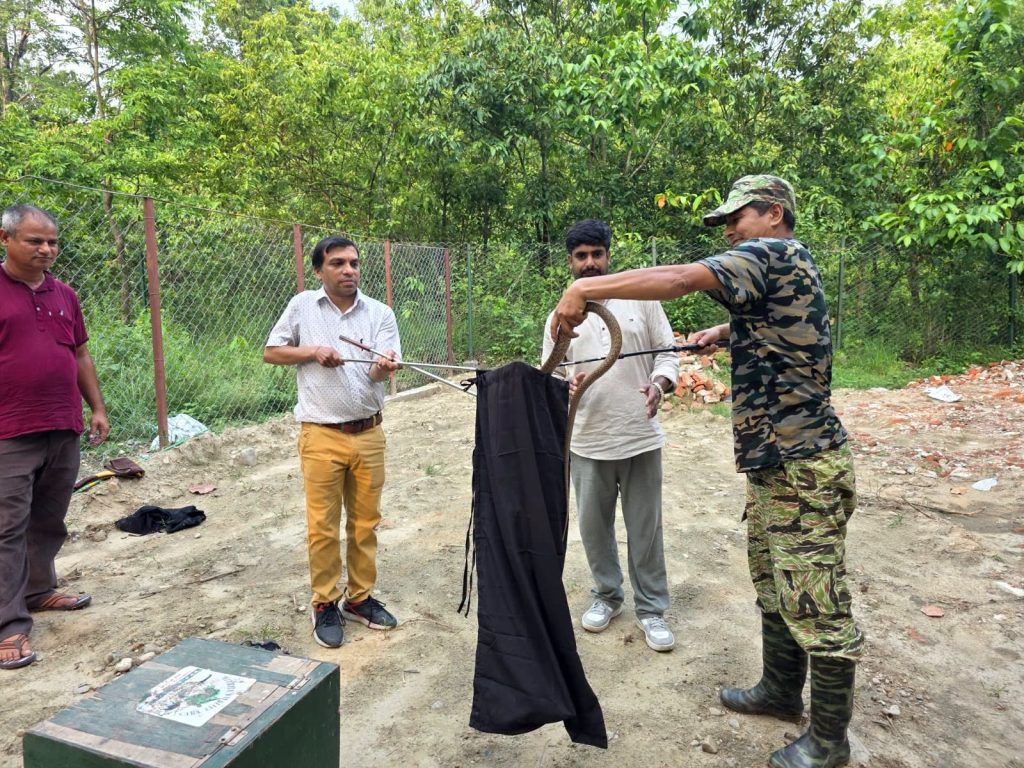
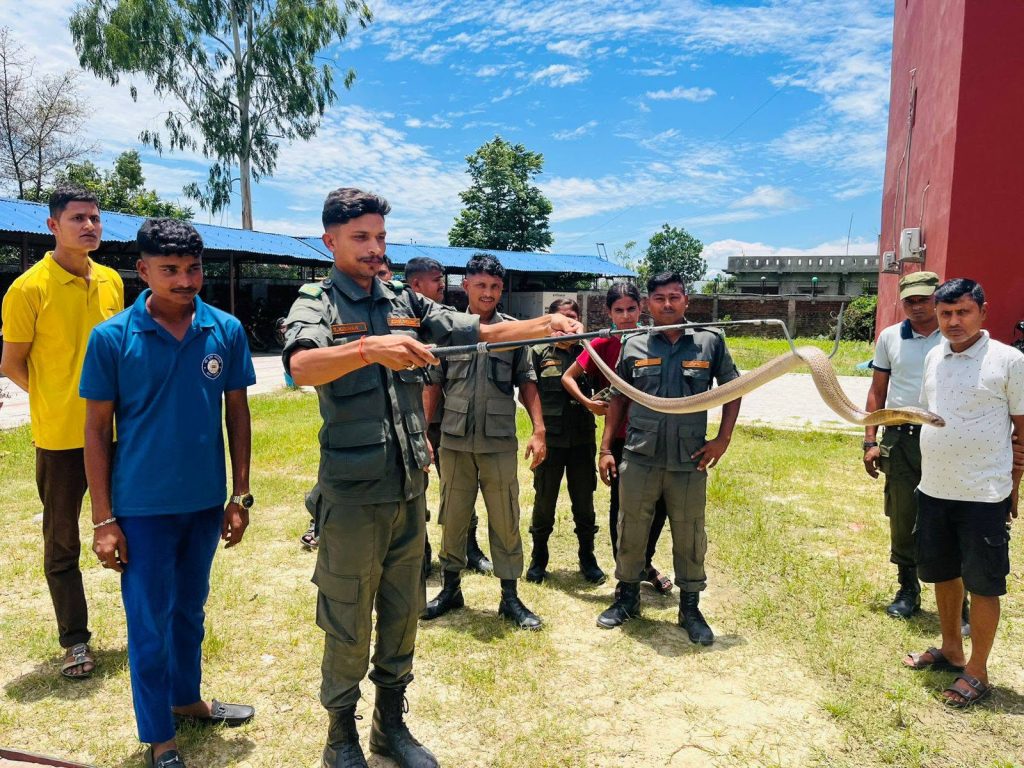
In Nepal’s southern plains, a snake in a home, school, farm, or public space can quickly become an emergency. Communities may be frightened, attempts to remove the animal may be unsafe, and both people and snakes face the risk of injury or death. A fast, skilled local response can change that outcome. Mithila Wildlife Trust is working to strengthen the capacity of frontline responders so that wildlife emergencies—especially snake-rescue incidents—can be managed safely, professionally, and closer to the communities that need help. Our approach is based on a simple principle: people who are already present at the local level should have the knowledge, confidence, and systems needed to respond before fear turns into harm. We support training for local-level police and emergency responders, who are often among the first people contacted when a snake enters a human settlement. At the same time, we are training local forest department personnel, including forest guards and Armed Forest Guards, to ensure that sufficient trained snake rescuers are available within districts rather than only in distant district headquarters. This locally rooted model reduces response delays and unnecessary travel costs. It also improves safety for communities while preventing the indiscriminate killing of snakes—many of which play an important ecological role by controlling rodent populations. Recent collaborations demonstrate how capacity building can create practical, lasting impact. In Mahottari, Mithila Wildlife Trust provided technical support for a two-day Wildlife Rescue, Management and Human–Wildlife Conflict Mitigation Training organised by the Division Forest Office, Mahottari. The programme brought together forest officers, forest guards, Armed Forest Guards, and representatives of community and collaborative forests. Participants strengthened their skills in wildlife rescue, safe handling, emergency response, and conflict mitigation through both classroom learning and hands-on demonstrations. Similarly, in Bara, Mithila Wildlife Trust and Save The Lives Society provided technical support for a two-day training organised by the Division Forest Office, Bara. Held at Gadhimai Collaborative Forest in Pathlaiya, the training engaged 55 frontline participants, particularly Armed Forest Guards. It covered wildlife rescue techniques, safe handling, rescue protocols, human–wildlife conflict mitigation, and practical snake-handling and rescue skills. These trainings do more than transfer technical knowledge. They build a network of capable responders who can act calmly in high-pressure situations, advise communities appropriately, coordinate safe rescue, and contribute to responsible wildlife management. For international donors, supporting this work means investing in a practical and scalable conservation solution. Funding can help expand training to more municipalities and districts; equip local responders with essential safety gear; develop emergency-response protocols and referral networks; and deliver community awareness programmes that reduce fear and prevent unsafe behaviour. The need is urgent, but the solution is achievable. When municipal responders, local police, forest personnel, and community institutions are equipped to respond safely, communities become more secure and wildlife has a better chance of survival. Mithila Wildlife Trust is committed to working with government agencies, local communities, conservation partners, and donors to build this frontline capacity—one trained responder, one municipality, and one district at a time.

Building Local Capacity for Safer Snake Rescue and Human–Wildlife Coexistence Read More »

Practical Session for Emergency Responders

घरमा सर्प देखिनु आपतकालीन अवस्था हो : उद्धार र सुरक्षित स्थानान्तरणको जिम्मेवारी स्थानीय सरकारले लिनुपर्छ ।

घरभित्र सर्प पस्दा मानिसको पहिलो प्रतिक्रिया प्रायः डर हुन्छ। परिवारलाई बालबालिका, ज्येष्ठ नागरिक र घरपालुवा पशुको चिन्ता हुन्छ। चारैतिर डर र हल्ला भएको अवस्थामा सर्पसमेत तत्काल मारिने जोखिममा पर्छ। यो केवल वन्यजन्तुसम्बन्धी विषय होइन; मानिस र सर्प दुवैका लागि आपतकालीन अवस्था हो। मिथिला तथा तराईका धेरै स्थानमा तालिमप्राप्त सर्प उद्धारकर्ता जिल्ला सदरमुकाममा मात्र उपलब्ध हुन्छन्। दुर्गम वा टाढाका वडामा रहेका परिवारसम्म उद्धारकर्ता पुग्न कम्तीमा एक घण्टा वा अझ बढी समय लाग्न सक्छ। यो बीचमा डर बढ्छ, मानिसले आफैँ सर्प समात्ने वा मार्ने जोखिमपूर्ण प्रयास गर्न सक्छन्, र सर्पदंश वा सर्प मारिन सक्ने सम्भावना बढ्छ। टाढाबाट उद्धारकर्ता बोलाउँदा यात्रा तथा आर्थिक खर्च पनि धेरै पर्न सक्छ। यसलाई अरू कसैको जिम्मेवारी भनेर स्थानीय सरकारले पन्छाउन मिल्दैन। नगरपालिका तथा गाउँपालिकासँग विपद् व्यवस्थापन र आपतकालीन सहयोगका संरचना छन्। धेरै स्थानीय तहमा नगर प्रहरी वा स्थानीय प्रतिकार्य टोली पनि छन्, जसले नागरिकलाई आपतकालमा सहयोग गर्ने जिम्मेवारी लिएका हुन्छन्। घर, विद्यालय, कार्यस्थल वा सार्वजनिक स्थानमा सर्प देखिनु पनि यस्तै आपतकालीन अवस्थाका रूपमा स्वीकार गरिनुपर्छ। स्थानीय स्तरमै सम्भव छ प्रभावकारी प्रतिकार्य हरेक स्थानीय तहले वडा स्तरसम्म पुग्ने सर्प उद्धार तथा प्रतिकार्य प्रणाली विकास गर्नुपर्छ। नगर प्रहरी र विपद् व्यवस्थापनमा खटिने कर्मचारीलाई सर्प देखिएको सूचना लिने, स्थान सुरक्षित बनाउने, समुदायलाई शान्त र सुरक्षित राख्ने तथा तालिमप्राप्त सर्प उद्धारकर्तासँग समन्वय गर्ने तालिम दिन सकिन्छ। सम्भव भएको ठाउँमा छनोट गरिएका कर्मचारीलाई सुरक्षित उद्धार र व्यवस्थापनका लागि आवश्यक तालिम तथा उपकरण उपलब्ध गराउनुपर्छ। यसको उद्देश्य अप्रशिक्षित व्यक्तिलाई सर्प समात्न प्रेरित गर्नु होइन। बरु, डराएका परिवारले घण्टौँसम्म असहाय भएर पर्खनु नपरोस् र जोखिमपूर्ण तरिकाले आफैँ उद्धार गर्ने प्रयास नगरून् भन्ने हो। प्रभावकारी स्थानीय प्रणालीमा निम्न व्यवस्था हुन सक्छन्: घर वा बस्तीमा सर्प देखिएमा सम्पर्क गर्न सकिने सार्वजनिक आपतकालीन नम्बर। प्रत्येक स्थानीय तहमा तालिमप्राप्त नगर प्रहरी वा विपद् व्यवस्थापन प्रतिकार्यकर्मी। स्थान सुरक्षित बनाउन आवश्यक आधारभूत उपकरण र स्पष्ट कार्यविधि। तालिमप्राप्त सर्प उद्धारकर्ता, वन कार्यालय, स्वास्थ्य संस्था तथा संरक्षण संस्थासँग सहकार्य। तालिमप्राप्त व्यक्तिबाट उपयुक्त र सुरक्षित वासस्थानमा कानुनसम्मत स्थानान्तरण। जनचेतना: सर्पबाट टाढा रहने, बालबालिका र पशुलाई सुरक्षित राख्ने, सर्पलाई नउक्साउने वा नमार्ने, र तत्काल सहयोग माग्ने। मनरा शिसवा नगरपालिकाबाट सिक्न सकिने उदाहरण महोत्तरीको मनरा शिसवा नगरपालिका स्थानीय तहको सक्रियताले कस्तो परिवर्तन ल्याउन सक्छ भन्ने व्यावहारिक उदाहरण हो। नगरपालिकाले आफ्नो क्षेत्रभित्रका सर्प उद्धारका घटनामा मात्र प्रतिकार्य गरिरहेको छैन, आवश्यक पर्दा छिमेकी स्थानीय तहलाई समेत सहयोग गरिरहेको छ। यसले उद्धारमा हुने ढिलाइ घटाउँछ, अनावश्यक रूपमा सर्प मारिने घटना रोक्छ र डरका बेला समुदायलाई भरपर्दो आपतकालीन सहयोग उपलब्ध गराउँछ। मिथिला वाइल्डलाईफ ट्रस्ट अन्य स्थानीय तहमा पनि यस्तै प्रणाली विकास गर्न आवश्यक सबै प्राविधिक सहयोग गर्न तयार छ। यसमा स्थानीय स्तरका नगर प्रहरी र आपतकालीन प्रतिकार्यकर्मीलाई सुरक्षित व्यवस्थापन, उद्धार समन्वय, समुदायसँगको संवाद तथा जिम्मेवार स्थानान्तरणसम्बन्धी तालिम समावेश हुन्छ। मानिस र वन्यजन्तु दुवैको सुरक्षा धेरै मानिसले विषालु र विषरहित सर्प छुट्याउन सक्दैनन्। डरको अवस्थामा हरेक सर्पलाई खतरनाक ठानिन सक्छ। तर सबै सर्प मार्नु न त सुरक्षित उपाय हो, न आवश्यक नै। सर्पले मुसालगायतका कृन्तकको संख्या नियन्त्रण गरेर पारिस्थितिक प्रणाली सन्तुलित राख्न महत्त्वपूर्ण भूमिका खेल्छन्। यसले बालीमा हुने क्षति र रोग फैलिने जोखिमसमेत कम गर्न सहयोग गर्छ। तर सहअस्तित्वको अर्थ समुदायलाई सम्भावित जोखिम एक्लै सामना गर्न छोड्नु पनि होइन। घरमा सर्प पस्दा परिवारले छिटो, भरपर्दो र सुरक्षित सहयोग पाउनुपर्छ। सर्पलाई पनि अनावश्यक रूपमा मारिनबाट जोगाउने तालिमप्राप्त प्रतिकार्य आवश्यक छ। त्यसैले स्थानीय सरकारको नेतृत्व अत्यन्त महत्त्वपूर्ण छ। आगलागी, बाढी, सडक दुर्घटना र अन्य आपतकालमा प्रतिकार्य गर्न सक्ने स्थानीय तह वन्यजन्तु मानव बस्तीमा प्रवेश गर्दा पनि तयारी अवस्थामा हुनुपर्छ। स्थानीय सरकारका लागि आह्वान मिथिला वाइल्डलाईफ ट्रस्टले सबै नगरपालिका र गाउँपालिकालाई सर्प उद्धार तथा सुरक्षित स्थानान्तरणलाई स्थानीय विपद् व्यवस्थापन र आपतकालीन प्रतिकार्य योजनामा समावेश गर्न आह्वान गर्दछ। यसका लागि तालिम, उपकरण, समन्वय र समर्पित प्रतिकार्य संयन्त्र आवश्यक छ। यसलाई जिल्ला सदरमुकाममा रहेका सीमित स्वयंसेवक वा उद्धारकर्ताको भरमा मात्र छोडिनु हुँदैन। घरमा सर्प देखिनु सामान्य असुविधा मात्र होइन। यो यस्तो समयसंवेदनशील आपतकाल हो, जहाँ एउटा गलत निर्णयले मानिस वा सर्प—दुवैको ज्यान जान सक्छ। स्थानीय सरकार नागरिकको सबैभन्दा नजिकको सरकार हो। त्यसैले मानिस र सर्प दुवैका लागि समुदायलाई सुरक्षित बनाउने जिम्मेवारी, उपस्थिति र अवसर स्थानीय सरकारकै हातमा छ।

घरमा सर्प देखिनु आपतकालीन अवस्था हो : उद्धार र सुरक्षित स्थानान्तरणको जिम्मेवारी स्थानीय सरकारले लिनुपर्छ । Read More »