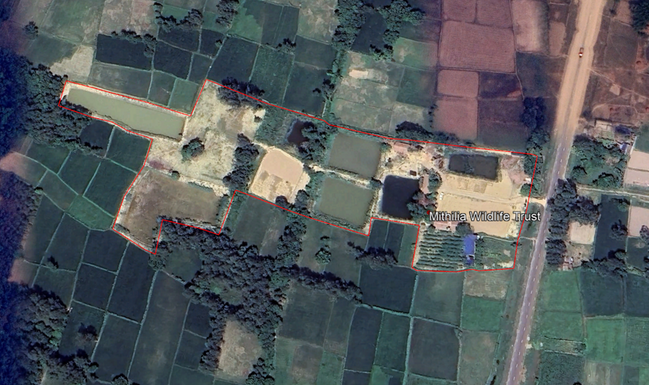
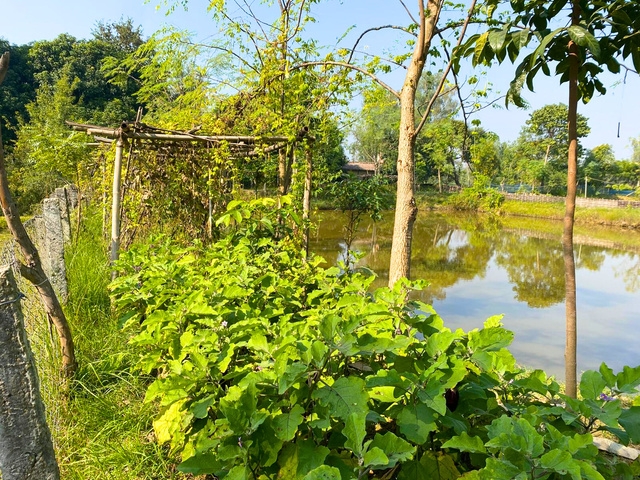
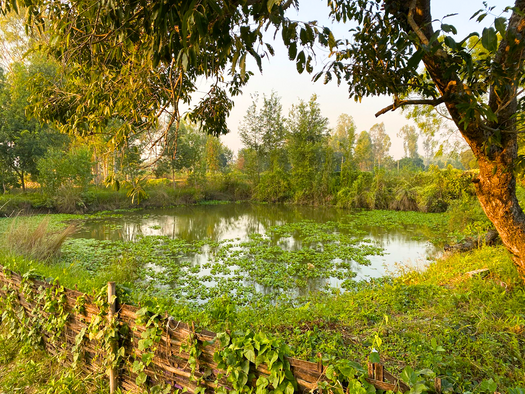
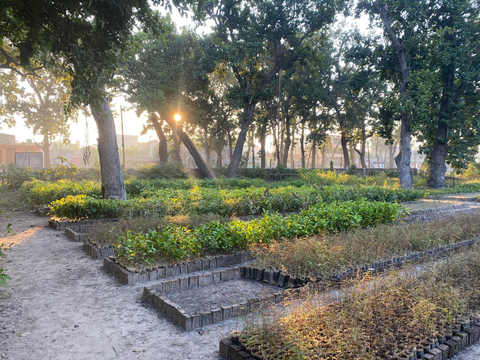
Nestled deep in the Terai region of Nepal in the Madesh Province, Mithilia Wildlife Trust (MWT) have set up their office in what was previously just agricultural land and transformed it into a biodiverse oasis of ponds, farmland and forest.
Mithila Culture
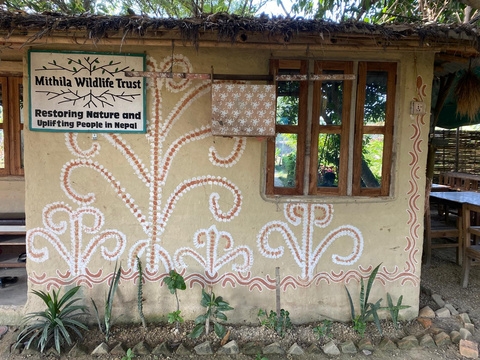
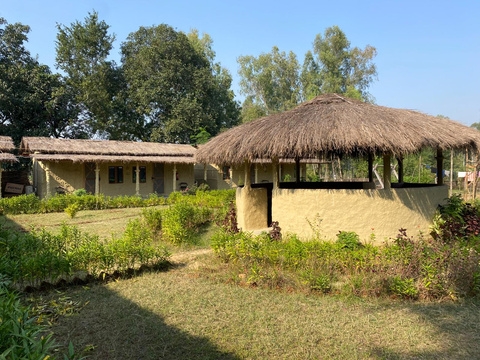
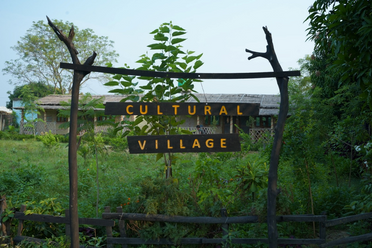
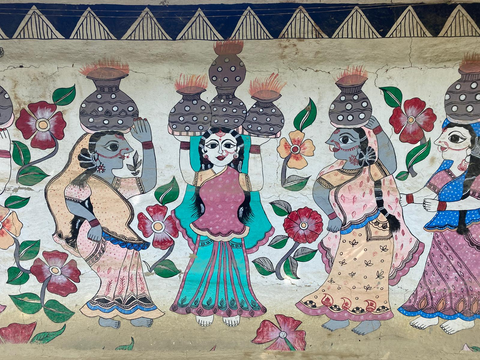
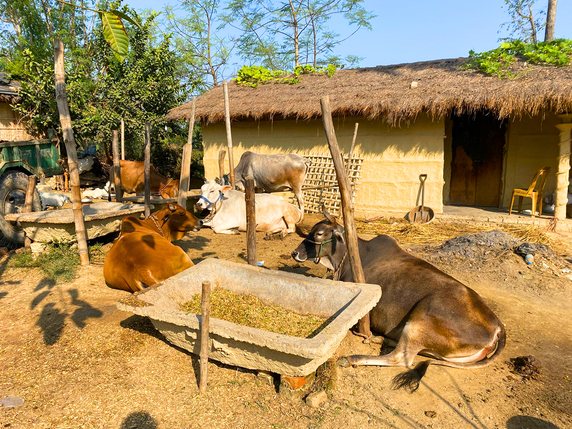
The site is home to the Mithila Cultural Village which pays homage to the traditional lifestyle and livelihoods of the Mithila people. The offices and lodgings are built using traditional Mithila methods, utilising mud, cow dung and natural fibres, and are beautifully designed with patterns and scenes in the Mithila style to uphold the culture.
Our Ethos
Seven ponds were excavated on the site, some preserved purely for wildlife and the other as fish ponds. The site is a working organic farm with various livestock and a diverse range of crops, all of which supply the restaurant with homegrown food to feed visitors.Additional produce is supplied from good quality local producers. All proceeds from the accommodation and restaurant are utilised to fund various conservation and cultural projects in the region.
Biodiversity
Intermixed within the farm and ponds are small patches of grassland, forest and scrub. This diverse array of habitats, ponds and farmland has created this biodiverse haven which is rich in flora and fauna, compared to the adjacent agricultural land.
As water is a scarce resource in the region, during the dry season these ponds become a vital resource for wildlife as they are usually the only water sources that do not completely dry out. During this period water is transferred from these ponds to other wildlife ponds that have been created alongside MWT reforestation sites to ensure that these sites remain a lifeline for wildlife.
Our frequent visitors
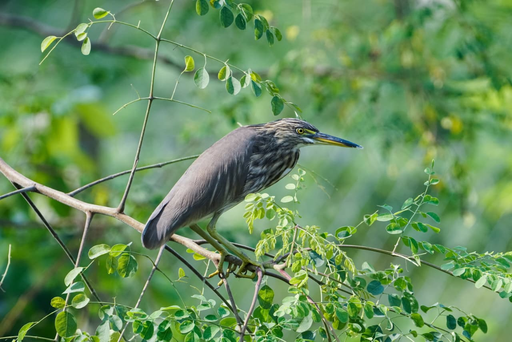
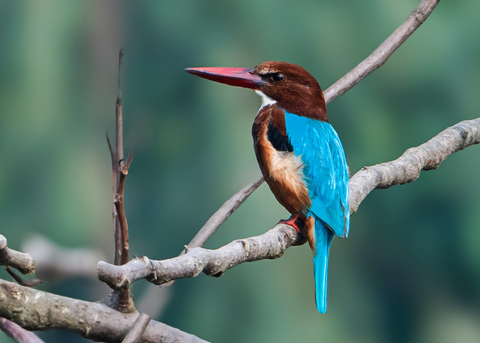
After setting up the village nature is thriving. Here are some of our frequent visitors recorded by our team.
Collaborative working
MWT maintains a good relationship with a numberof other organisations and government departments.
Due to MWT’s efforts in restoring and protecting the Dhanushadham Forest a strong relationship has been developed with the local Forestry Office.
A result of this good relationship is that the Forestry Office now supplies MWT with all the native trees and seeds that is needed for reforestation projects utilising the Miyawaki method.