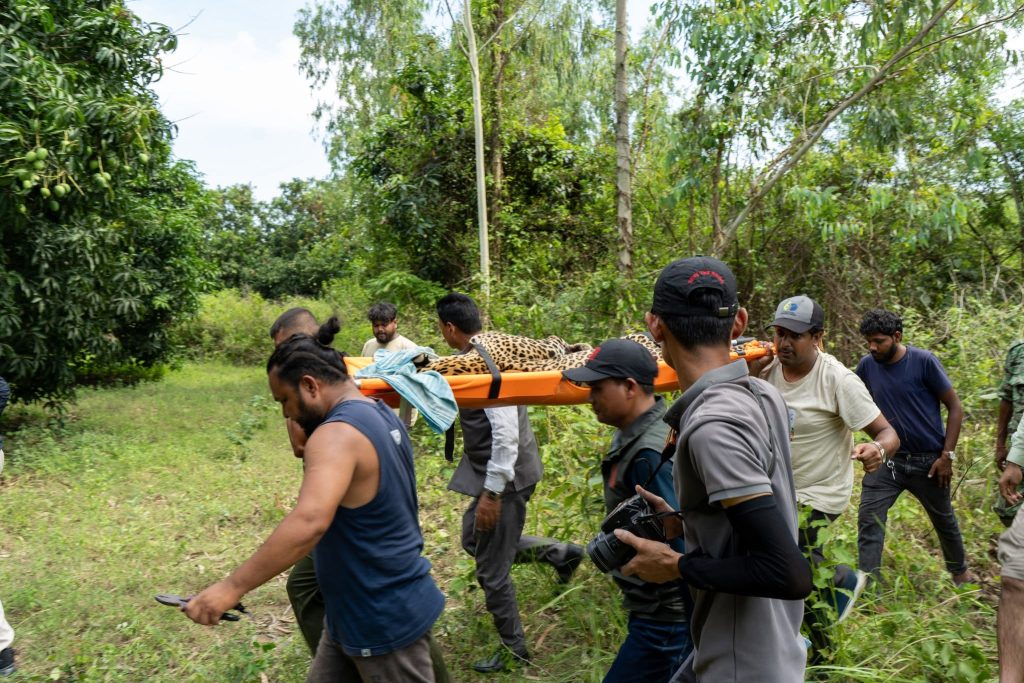
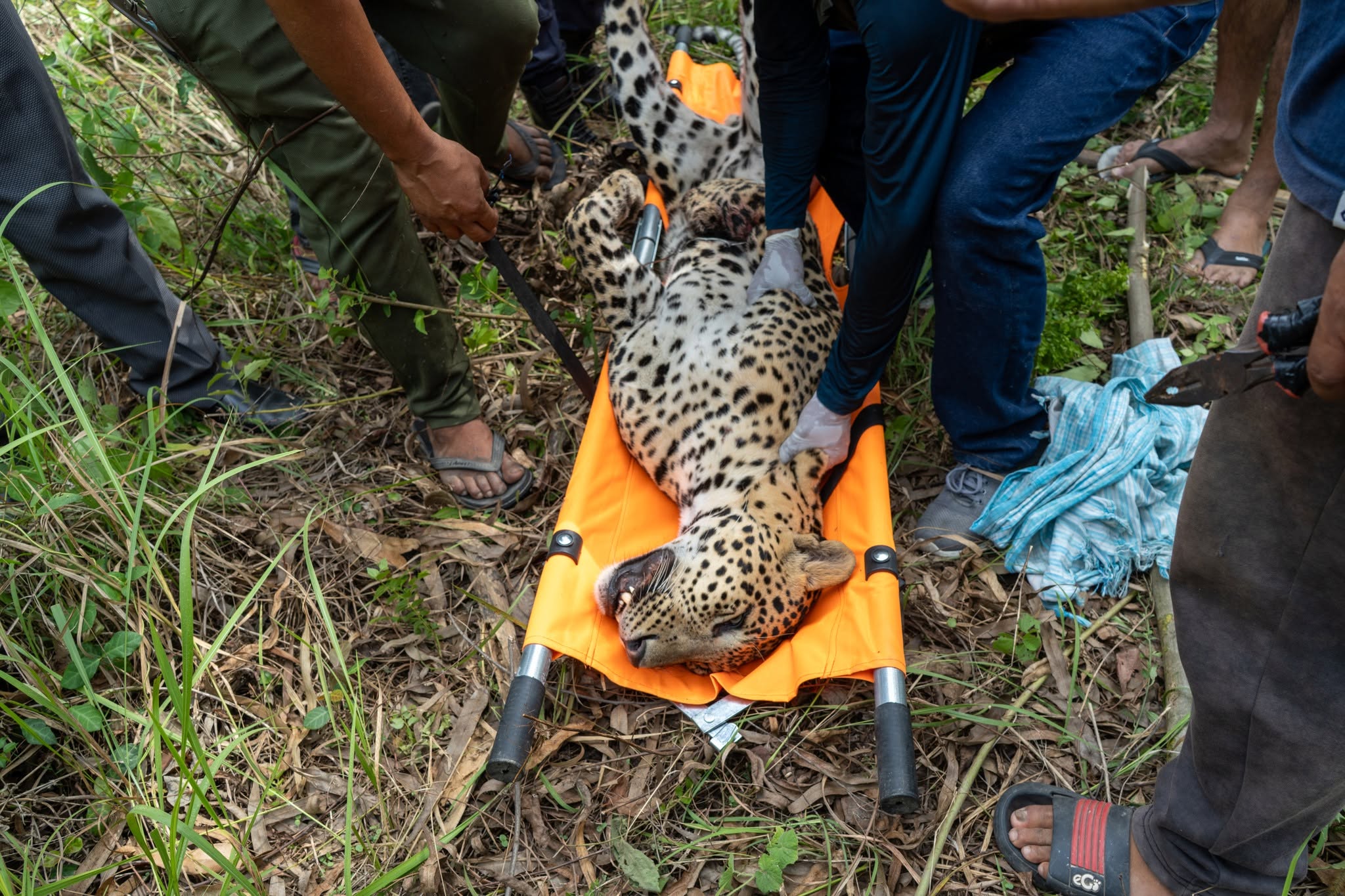
Rescued Leopard ready to get transportedMithila Wildlife Trust, forest officials, local leaders, community forest groups, and wildlife-rescue specialists from Parsa National Park and National Trust for Nature Conservation work together to safeguard both people and wildlife.
A leopard that had been preying on goats in Mithila Municipality, Dhanusha District, for approximately three months has been safely rescued and sent for rehabilitation in a secure habitat.
The rescue followed a sustained, collaborative effort involving the Division Forest Office, Dhanusha; ward representatives from Mithila Municipality–7; the Kemalipur and Pokhari Damar Community Forest User Groups; the provincial coordinator of the Federation of Community Forestry Users Nepal; Mithila Wildlife Trust’s technical team; and local communities.
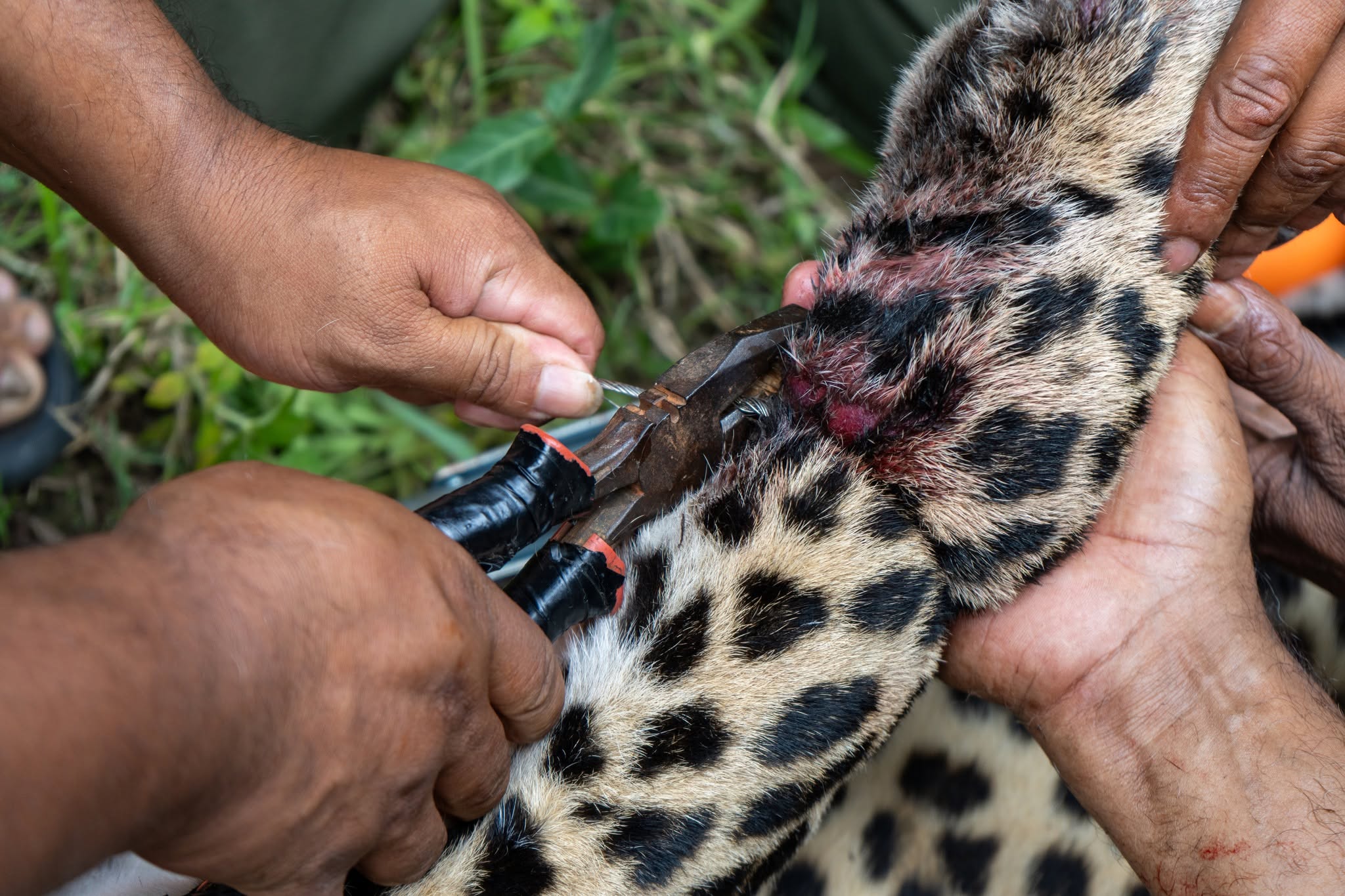
The leopard had reportedly entered livestock sheds in the Eklebir and Kemli Pakha areas of Mithila Municipality–7 on several occasions, killing and feeding on around 18 goats. After identifying the animal’s likely range and carrying out careful management efforts, the leopard was found caught in a trap set by local residents. A specialist rescue team from Parsa National Park–Adhabhar and the National Trust for Nature Conservation then carried out the safe rescue.
Leopards have been recorded in the Chure region of Mithila Municipality before. The first camera-trap record in the area was made in 2017, followed by records in 2019, 2021, and 2023. The recent pattern of livestock predation, however, had caused concern among farmers and local residents.
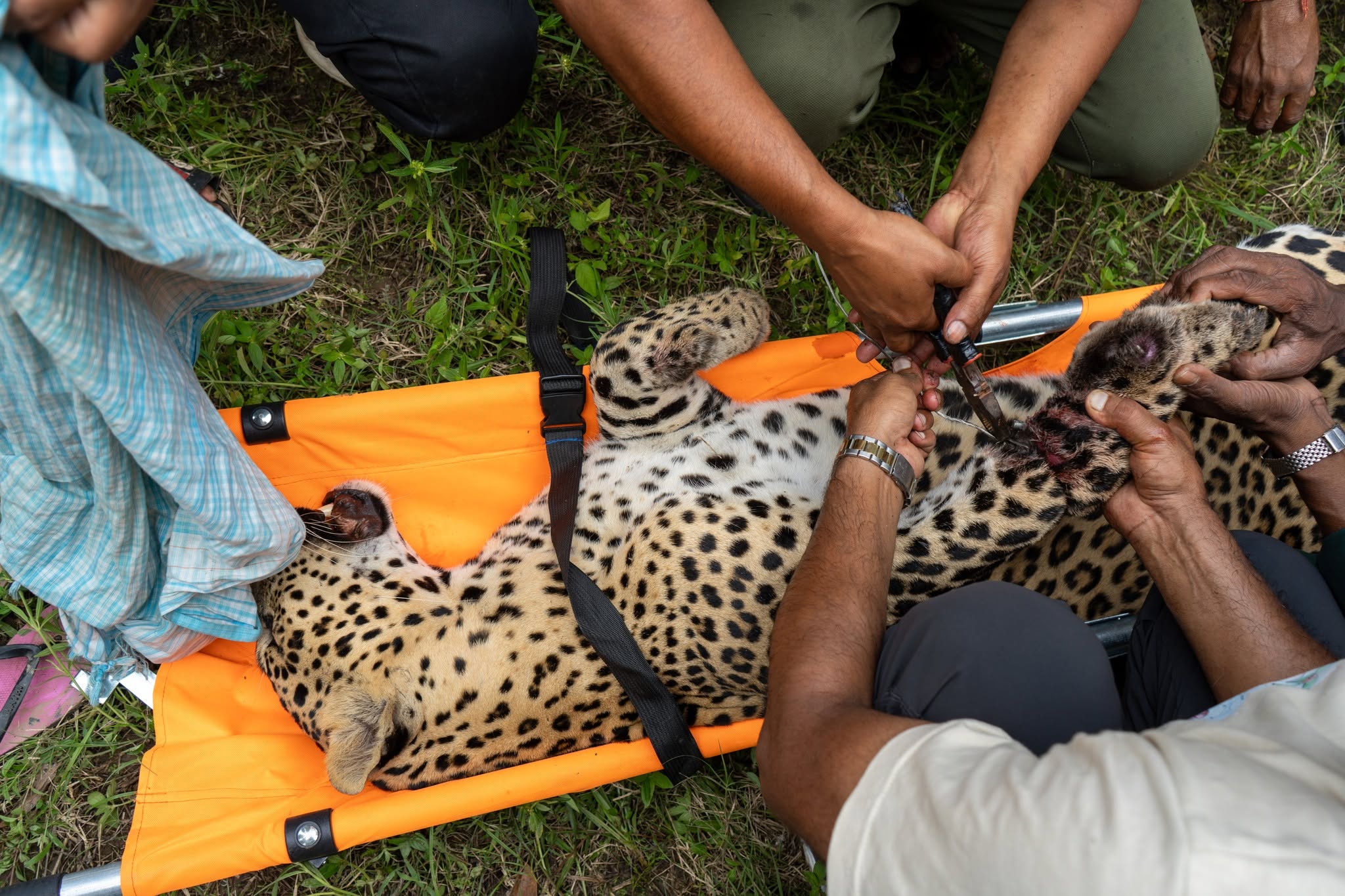
Leopards generally live for around 10 to 15 years in the wild. Based on the animal’s behaviour, it is possible that this leopard was ageing and finding it increasingly difficult to hunt natural prey such as wild boar, deer, and nilgai in the forest. Goats kept in sheds may therefore have become an easier source of food. Leopards are naturally shy, solitary, and mainly nocturnal animals that usually avoid people.
While the rescue has reduced the immediate risk of livestock loss, it also highlights the importance of maintaining healthy ecosystems. Leopards play an essential ecological role by helping regulate populations of animals such as wild boar and nilgai, which can cause significant crop damage. Their absence from an area may lead to increased agricultural losses for farmers over the long term.
The rescue operation was coordinated by the Division Forest Office, Dhanusha, in collaboration with Chief Conservation Officer Ram Chandra Khatiwada and Conservation Officer Santosh Bhagat of Parsa National Park. The team included veterinarian Dr. Nabina Dhakal and wildlife rescuers Firulal Chaudhary, Kiran Thakuri, and Buddha Lama from the National Trust for Nature Conservation.
Until the specialist team arrived from Adhabhar, Bara, forest officers and guards from the Division Forest Office, Dhanusha, and the Sub-Division Forest Office, Pushpawalpur, coordinated with the Area Police Office to manage the crowd and ensure safety. Mithila Wildlife Trust wildlife rescuers Subodh Acharya and Gautam Raj Mandal coordinated with community forest representatives and the ward chairperson to monitor the leopard.
Mithila Wildlife Trust sincerely thanks Ward Chairperson Ram Syangdan of Mithila Municipality–7 for his continuous leadership and for encouraging the community to respond positively throughout the past three months. We also express our gratitude to journalists, especially Bijay Sah and Bijay Singh, for helping share timely information and promote coexistence between people and wildlife.
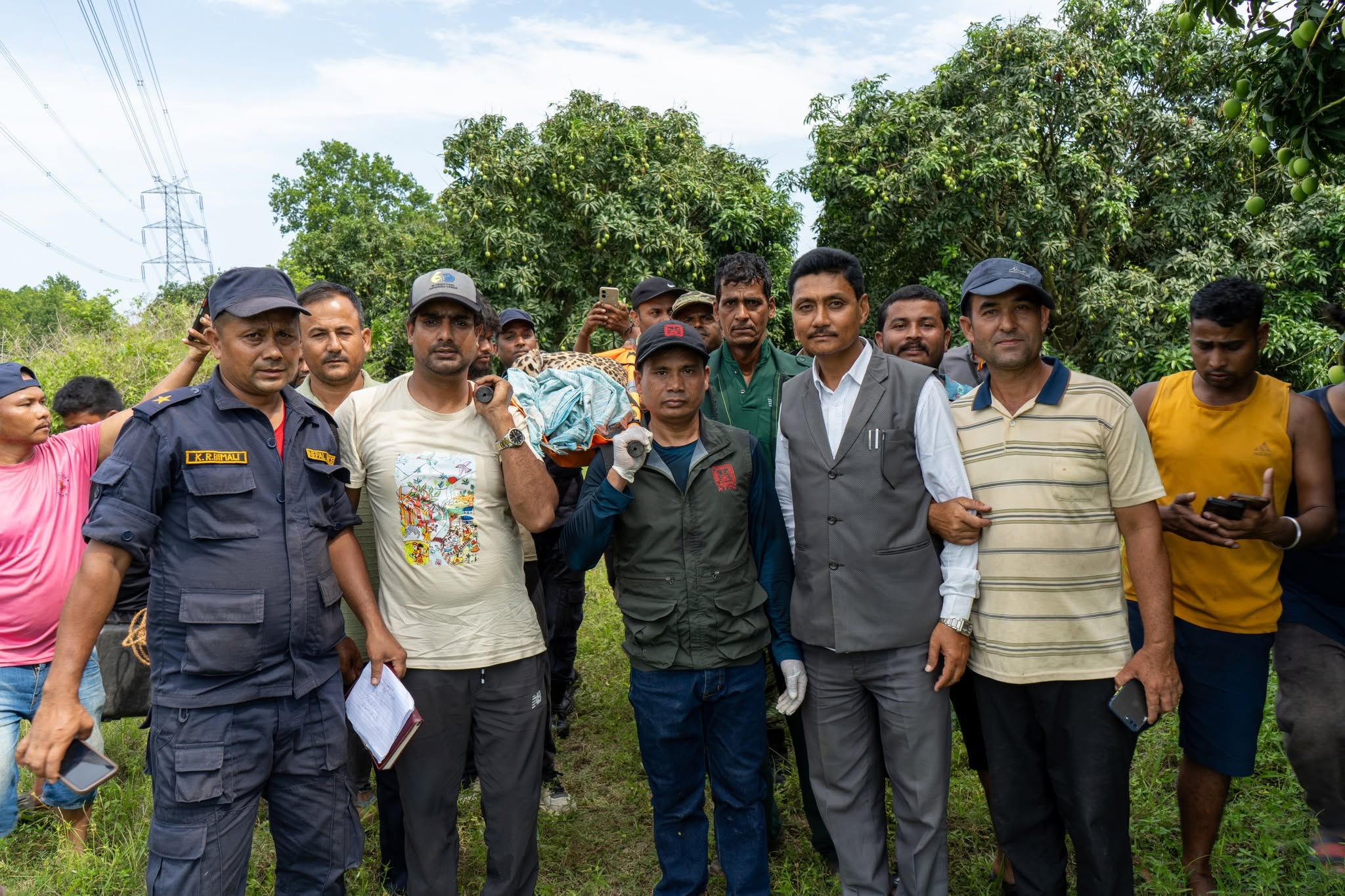
We extend heartfelt appreciation to every agency, community member, volunteer, and individual who contributed directly or indirectly to the rescue and management of this leopard. This operation demonstrates that effective conservation is possible when communities, government agencies, conservation organisations, and wildlife experts work together.